Characteristics of FO lapping Powder for grinding Silicon Wafers
FO1200 lapping powder is typically used for grinding silicon wafers.
The key characteristics of FO lapping powder are as follows:
1. Moderate hardness and balanced, gentle cutting action.
Unlike green silicon carbide (GC), which cuts aggressively and often causes subsurface cracks, or conventional white fused alumina (WA), which has high toughness that can lead to slippage and an uneven matte finish, FO polishing powder—a composite of aluminum oxide and zirconium oxide—features a precisely tuned hardness. It effectively removes the damage layer left by wire-sawing silicon wafers without being overly sharp, ensuring that micro-scratches on the finished product remain within controlled limits. This makes it ideal for silicon wafers used in power devices.
2. Narrow particle size distribution, strict control over oversized particles, and excellent batch-to-batch consistency.
Coarse, sharp, or oversized particles are rigorously screened out, with the D99 value strictly controlled. Since double-sided lapping involves processing multiple wafers simultaneously on a single platen, consistent particle size ensures stable Total Thickness Variation (TTV), parallelism, and a uniform matte surface finish. Minimal variation between batches makes it well-suited for continuous mass production in silicon wafer manufacturing facilities.
3. Low levels of magnetic impurities and heavy metals (such as Fe and Cu).
Produced under semiconductor-grade cleanliness standards, this powder contains very low levels of transition metals like iron and copper. This minimizes metal contamination on the silicon wafers, preventing risks related to subsequent diffusion processes or electrical leakage—a major advantage over standard lapping powders.
4. Particle morphology optimized for free-abrasive lapping; excellent dispersibility with minimal agglomeration.
The specific particle shape ensures stable dispersion within water-based lapping slurries, with controlled sedimentation rates. During the lapping process—which utilizes a cast-iron platen and retaining ring system—the particles perform a rolling, cutting action rather than simple scratching. This results in a uniform surface texture across the entire silicon wafer, preventing localized over-lapping.
5. Stable and Controllable Removal Rate with a Wide Process Window
The removal rate remains stable even with minor fluctuations in pressure or rotational speed, making it easier for production engineers to fine-tune the process. This allows for reliable, precise thinning of silicon wafers to a target thickness, making it well-suited for the standardized production of wafers for sensors and power devices.
6. Excellent Post-Polishing Cleanability
Abrasive debris is easily rinsed away using pure water or cleaning agents. Minimal powder residue remains within the micropores or on the surface of the silicon wafers, which reduces the burden on the cleaning stage and lowers the defect rate caused by foreign particles.
In summary: FO lapping powder is designed for free-abrasive double-sided precision lapping—a process performed after wafer slicing but prior to CMP. It effectively removes the subsurface damage layer caused by wire-sawing, controls Total Thickness Variation (TTV), and produces a uniform, matte surface finish. Balancing a high removal rate with minimal scratching, it serves as a classic consumable for power-device silicon wafers.
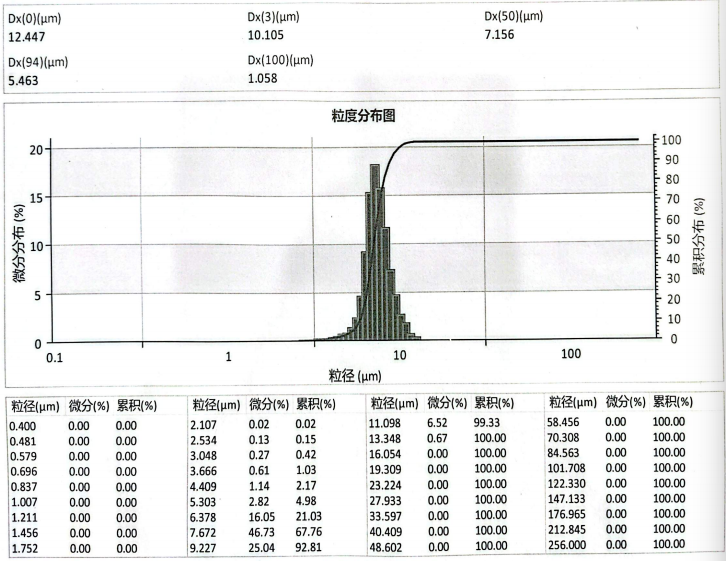
Zhengzhou Haixu Abrasives Co., Ltd. produces and supplies a high-quality alternative to Japan’s FUJIMI FO lapping powder: aluminum oxide-zirconium silicate composite abrasive. The relevant test reports are provided below:
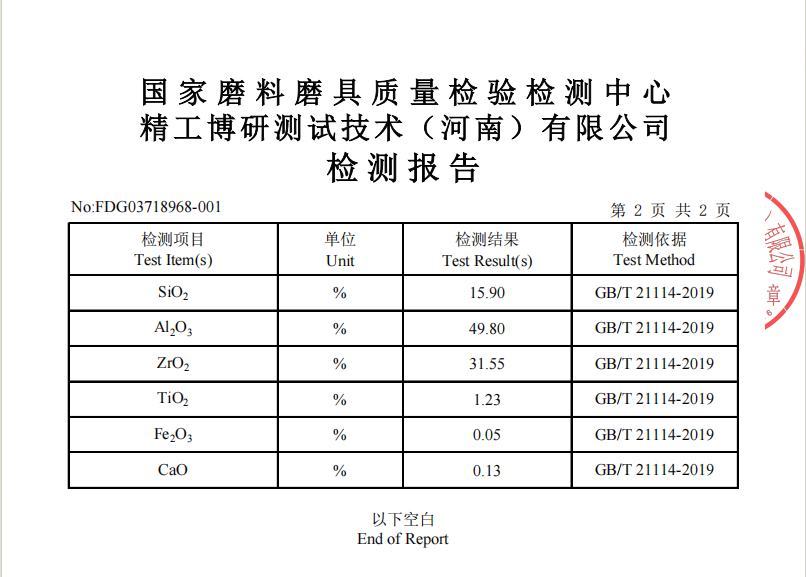
Particle Size Distribution Report for Haixu Abrasives’ 1200-mesh Aluminum Oxide-Zirconium Silicate Composite Abrasive (an alternative to FUJIMI FO 1200)